18 months ago, I started experimenting with the carnivore diet to see if it would help my Burning Mouth Syndrome (BMS). After four years of unbearable burning pain and watching my diet shrink down to maybe 10 safe foods, I decided to test what would happen if I eliminated all plant acids, fruits, and fermentable carbohydrates.
In this post, I want to share my journey through these last 18 months of trying it and yo-yoing, and how I finally reached six continuous months of being completely pain-free at a stable 0/10 baseline. But it was a real journey and it was not easy; sticking with it was one of the hardest things I have ever done in my life.
My Results
When I first started this trial, I was living with constant 10/10 burning pain that made speaking, eating, and sleeping almost impossible. Over the course of 18 months, my pain did not drop in a simple straight line; it was an escalating series of trials, setbacks, and yo-yo cycles whenever I reintroduced normal foods, followed by complete relief once I stopped cheating entirely.
Looking at the 18-month timeline below, you can see how my pain fluctuated from peak flares down to a stable, unbroken six months of zero pain:
Disclaimers
- This is educational and informational only, not medical advice.
- Consult a medical professional before trying anything new.
- This is my personal health journey and personal experimentation.
- I use AI for my research, so be aware.
My Theory on Why the Carnivore Diet Works
My theory on why the carnivore diet works comes down to one simple fact: meat has no sugar. Because there is zero sugar, oral bacteria have nothing to ferment in the mouth.
My main discovery is that vegetables, just like fruits and grains, have sugar in them.
We know from FODMAP research that short-chain carbohydrates and sugar alcohols ferment rapidly. But even everyday savory vegetables are loaded with simple sugars and starches. When we chew vegetables, naturally occurring bacteria in the mouth feed on those sugars and convert them directly into acid.
That acid is what washes over our teeth and gums, directly triggering the pain sensors in our mouth and setting off the burning fire. By eliminating sugars and plant acids through a carnivore baseline, bacteria can no longer produce that acid, allowing irritated oral tissues and sensitized nerves to calm down completely.
In my body, the true environmental trigger is acid.
My Discoveries
I want to share five big discoveries that have led me to give me a theory on why this carnivore diet works:
Acidic Drinks Cause Me Burning Pain
My discovery: When I eliminated acidic drinks like beer, sodas, and coffee, I immediately protected my sensitive oral nerves and experienced noticeable burning pain relief.
Sugar Creates Acid in the Mouth, Therefore Creating Burning Pain Too
My discovery: Sugar causes burning pain because naturally occurring oral bacteria transform sugars directly into acid, setting off intense nerve fire.
Every Vegetable Has Sugar, Transforming into Acid and Pain
My discovery: Every vegetable contains simple sugars and starches. Oral bacteria ferment those sugars into acid, triggering the exact same burning fire as fruit or sweet carbohydrates.
The Carnivore Diet Has No Sugar and No Acid, Therefore There's No Pain
My discovery: Meat, poultry, seafood, and eggs have zero sugar and zero acid. Without fuel for bacterial fermentation, acid production stops completely and burning pain vanishes.
Once My Pain Went Down, Dentists Found Issues That Lowered It Even More
My discovery: Once my mouth was calm, my dentist discovered a physical defect on a leaking crown with hidden decay underneath. Addressing and repairing that crown defect lowered my pain even further.
I do not think this diet is a cure, but it is definitely something that stops the underlying trigger. As soon as I cheat, if I go back to eating any type of acid or fermentable food, the burning pain returns. But by removing those triggers entirely, my pain has vanished.
There are three main reasons I am very happy with this approach and why I have started to share it publicly:
- I am completely out of pain: My symptoms have been under steady control for 18 months, hovering at a stable 0/10 for the last six months.
- I can now get dental work and testing done: Because my mouth is calm and out of pain, I can finally sit in a dental chair, have tests done on my teeth and gums, and get investigative dental work completed to test my theories on what is actually causing the nerve irritation.
- I want to help fellow patients and work with doctors: BMS can feel terrifying and lonely. By sharing what worked for me, I hope to save others years of suffering, while collaborating with open-minded dentists and doctors who want to solve this condition for more people.
If you are a BMS patient, I get it. It is awful, debilitating, and exhausting. If you are a dentist, a doctor, or a researcher, thank you for stopping by. I am always open to answering questions about my diet, dental tests, and findings. Feel free to send me a message, and I will be delighted to connect.
7 Experiments That Lowered My Pain Over The Last Four Years
Looking at the graph below, you can see that my journey was not a straight downward line. It was an escalating series of distinct episodes over four years, each followed by a temporary window where I thought I had solved the puzzle.
Here is how I discovered that acid seems to be a problem for my pain, and how eliminating it completely allowed the burning to go away:
Experiment #1: Eliminate Beer & Wine (Approx. 4 Years Ago)
My symptoms first began with severe aching and burning triggered by dark ales, beer, and wine. At the time, I had no idea what Burning Mouth Syndrome was. I assumed it was an isolated sensitivity. I eliminated alcohol completely, and within weeks, the burning dropped back down to zero. For ~6 months, I was completely pain-free. I thought it was over.
Experiment #2: Eliminate Coffee
Six months later, out of nowhere, the fire returned at an 8/10. This time, the culprit was daily coffee. The acidity and roasting compounds irritated the oral mucosa. Once again, I eliminated coffee entirely, and the burning subsided back to a 0/10 baseline for another ~6 months pain-free.
Experiment #3: Routine Dental Cleaning
The third flare was triggered following a routine dental cleaning. Subgingival scaling and bacterial disruption aggravated my underlying gingival recession pockets. Once the gums settled, I entered another ~6-month pain-free window.
Experiment #4: Eliminate Most Fruit
In late 2024, healthy fruits (citrus, berries, apples) became intolerable. The natural plant acids (pH 3.0) stung exposed nerve endings like lemon juice on an open cut. Eliminating most fruit restored my zero-pain baseline for another ~6 months pain-free.
Experiment #5: Gumline Bonding Patches
By early 2025, the pain escalated to a severe 9/10. My dentist identified root exposure and abfractions at the gumline and placed gumline composite bonding patches (cervical dental resin) to physically shield the sensitive dentin. This mechanical barrier worked brilliantly, giving me another ~6 months of complete pain-free relief.
Experiment #6: Two-Week Carnivore Trial
In April 2025, the composite patches degraded from micro-leakage and acid wear. The burning roared back at a catastrophic 10/10. At that point, I had no idea what to eat anyway; almost every conventional food seemed to set my mouth on fire.
One day, I was browsing on YouTube and saw a suggested video about the carnivore diet and inflammation. I didn’t know anything about the carnivore diet, and I had never even heard of it before, but out of curiosity, I clicked on it. That’s when I discovered an entire community of people who eat only meat.
It sounded strange to me at first, but living with constant 10/10 pain, I figured: Let me give this a shot for a few days or a few weeks. I didn’t have a structured plan or know if it would even work, but I had nothing to lose.
To my complete astonishment, within 7 to 10 days of eating only meat, my pain dropped down from a 10/10 to roughly a 3 out of 10.
I was so relieved that I immediately thought: Oh my god, my pain is so low now, maybe I’m cured!
So I would go back to the grocery store, buy the typical foods I used to eat, and eat them. For about two days, things seemed fine, and then the excruciating burning would come roaring back. I would panic and scramble back to meat, salt, and water.
I repeated this exact yo-yo dance for over a full year.
Looking back, my theory is that our daily food habits are incredibly powerful and I was unconsciously addicted to the sugars in the foods I used to eat. I kept convincing myself that a little bit of normal food would not hurt.
Living through that yo-yo cycle was deeply stressful. Every time I switched back to an all-meat baseline, I spent days agonizing over whether the pain would actually drop back down, or if one day I would get permanently stuck in a 10/10 flare.
This repeated pattern convinced me that acid was entering the pulp of my teeth, either through open tubules via hydrodynamic pressure or through a leaking dental restoration. And as I later discovered, I certainly did have a leaking crown with hidden cavities underneath.
Experiment #7: Strict Carnivore for Six Months (Stable 0/10 Baseline)
After a full year of yo-yo testing and seeing the same 72-hour flare pattern repeat, I committed to 100% strict carnivore with zero cheats.
For the past six continuous months, I have flatlined at a rock-solid 0/10 pain baseline. By keeping oral bacteria completely starved of fermentable carbohydrates and eliminating all plant acids, my nerve pathways stabilized and the burning stopped entirely.
What Didn’t Work for Me: Testing 50+ Supplements & Water Filtration
Before discovering that acid and fermentable carbohydrates were the true trigger, I went through an exhausting medical gauntlet. I consulted 4 different dentists and 2 medical doctors, hoping someone could find a physical reason for the relentless fire. None of the clinical exams, swabs, or standard blood panels revealed an answer.
In desperate search of relief, I systematically tested over 50 vitamins, minerals, electrolytes, bile salts, and herbal supplements, along with zero-TDS water filtration gathered from medical literature and patient communities:
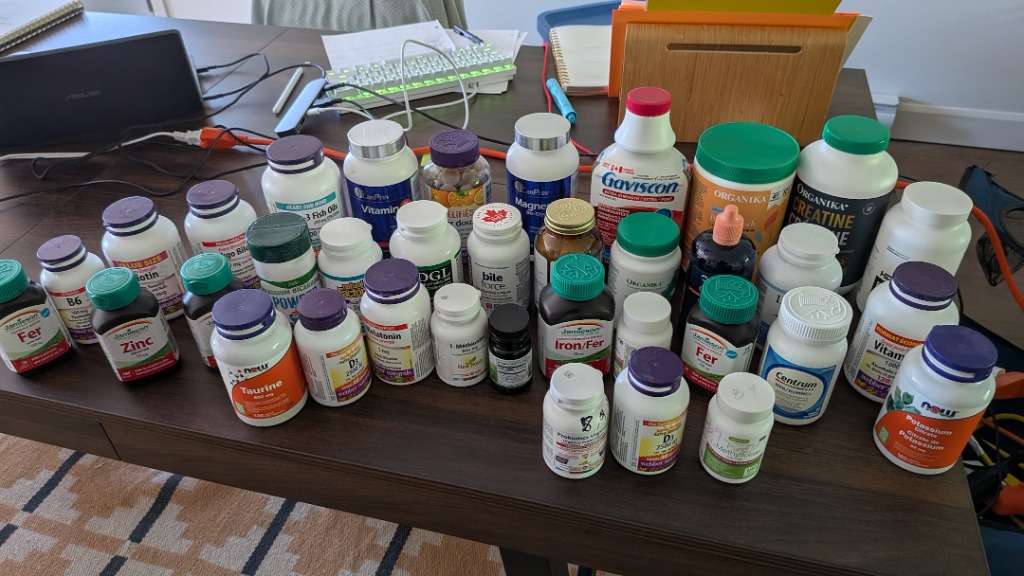
See the 50+ supplements and minerals that didn't work
1. Vitamins & Co-Factors
- Active Vitamin B-Complex
- Vitamin B6
- L-Methylfolate
- Biotin
- Vitamin D3
- Vitamin C Timed-Release
- Complete Men's Multivitamin
2. Minerals & Electrolytes
- Elemental Iron
- Timed-Release Iron Capsules
- Liquid Iron Drops
- Zinc
- Magnesium Bis-Glycinate
- Potassium Citrate
- Potassium Bicarbonate Powder
- Liquid Iodine
3. Water Purification
- ZeroWater 5-Stage TDS Filtration
- ConcenTrace Full-Spectrum Trace Minerals
- Distilled Water Re-Mineralization
4. Digestion, Gut & Reflux
- Critical Care Multi-Strain Probiotics
- Ox Bile Salts & Digestive Enzymes
- DGL Licorice Root
- Gaviscon Extra Strength Alginate Barrier
- Activated Charcoal Powder
5. Proteins & Amino Acids
- Pure Hydrolyzed Bone Broth Protein
- Collagen Peptides & HMB
- Pure Micronized Creatine
- L-Methionine
- Taurine Pure Powder
- Omega-3 Fish Oil EPA / DHA
6. Botanicals & Sleep
- Ginkgo Biloba
- Quick-Dissolve Melatonin
What I Eat Now
My everyday diet focuses strictly on non-fermentable, zero-sugar, and zero-acid foods to stop oral bacteria from generating corrosive lactic acid. In addition to clean animal proteins, fats, eggs, and mushrooms, I use select spices, pure stevia for sweetening, plain mild tea, and filtered water to maintain complete baseline comfort:
MEATS
Meats
- Ground Veal
- Beef Steaks
- Organs (Liver & Heart)
Pork
- Ground Pork
- Pork Loins
- Sugar-Free Bacon
Chicken
- Whole Roast Chicken
- Chicken Thighs
- Chicken Wings
Fats
- Raw Beef Suet
- Beef Tallow
- Cooking Drippings
FISH & SEAFOOD
Fish
- White Fish (Cod & Haddock)
- Red Fish (Wild Salmon)
- Mackerel
Seafood
- Wild Shrimp
- Fresh Oysters
- Wild Scallops
EGGS & MUSHROOMS
Eggs
- Omelets
- Stir-Fry
- Soft-Boiled
Mushrooms
- White Button
- Cremini & Portobello
- Zero Sugar / Zero Acid
SEASONINGS & SWEETENERS
Spices
- Pure Sea Salt & Mineral Salt
- Single-Ingredient Spices
- Zero Sugar & Zero Added Acid
Stevia
- 100% Pure Stevia Extract
- Zero Carbohydrates & Zero Sugar
- Non-Fermentable Sweetener
TEA & WATER
Tea
- Plain Mild Teas
- Zero Citric Acid & Zero Sugar
- Sweetened with Stevia Only
Water
- Pure Filtered Water
- Consistent Daily Hydration
- Zero Chemical Additives
CHEATING FOODS
Cheese
- Aged Hard Cheeses
- 1 meal = 0/10 pain; 2 meals = minor 1/10
- Occasional controlled treat
Butter
- Pure grass-fed butter
- Rich dairy fat for cooking
- Very low lactose content
DESENSITIZING TOOTHPASTE
Sensodyne Rapid Relief
- Active ingredient: Stannous Fluoride
- Used strictly when cheating with off-plan items
- Plugs open dentinal tubules to prevent nerve flares
The Biophysical Science: How Acid Burns Exposed Hardware & Nerves
Understanding the biophysical link between food and burning pain requires looking at what happens at the microscopic level: how naturally occurring sugars in vegetables feed oral bacteria, how oral bacteria generate corrosive lactic acid, and how that acid penetrates down exposed root conduits directly into dental nerves:
Sugar in the Top 12 Vegetables
Strictly sorted from highest Total Carbohydrates to lowest per 100g portion. Includes detailed sugar breakdowns and the hidden % Dry-Weight Carb Load (what remains once natural plant water is removed).
Sweet Potatoes
When dehydrated of its 77% water, an astounding 87% of a sweet potato is pure fermentable carbohydrate and starch that turns into rapid oral acid.
Sweet Corn
Carries both the highest free simple sugars (6.3g) and heavy starch. Dried corn solids are 79% pure carbohydrate.
Russet & White Potatoes
Appears low in sugar on labels (0.8g), but 83% of its dry solid matter is dense starch that salivary amylase turns into sugar within seconds.
Green Peas
Packed with simple sweet sucrose and soluble starches that break down and stick into periodontal crevices.
Carrots
Remove the 88% water and carrots are 80% sugar and carbohydrate solids, flooding plaque with instant lactic acid fuel.
Yellow & Red Onions
Dense in fast-fermenting fructan oligosaccharides that easily break down and acidify oral tissues.
Broccoli
60% of dry broccoli solids are carbohydrates that feed oral microflora over several hours.
Red & Green Bell Peppers
Almost all its carbohydrates are free fructose and glucose that wash across exposed root margins during chewing.
Green Cabbage
Fibrous cellular walls release simple sugars during prolonged chewing, sustaining acid-producing biofilm.
Tomatoes
Double threat: 65% dry carbohydrates plus inherent organic plant acidity (~pH 4.3).
Zucchini & Summer Squash
High 95% water content masks the fact that 62% of its actual dry food matter is fermentable sugar.
Iceberg & Romaine Lettuce
Even crisp water-rich salad greens contain 58% dry-weight carbohydrate residues compared to the absolute 0% of animal protein.
Is a "Carb" Just a Carb? Or Are They Different in Every Plant?
Biochemistry & FermentationWe hear the word "carbohydrate" constantly, but what actually is it? Chemically, all carbohydrates are built from simple single-sugar rings called monosaccharides (chiefly glucose and fructose). The difference between a potato, an apple, and table sugar is simply how those rings are linked together:
- Simple Sugars (Monosaccharides & Disaccharides): Glucose, Fructose, and Sucrose (found in apples, carrots, corn, and peppers). They are tiny 1- or 2-ring molecules that dissolve instantly in saliva and taste sweet immediately.
- Complex Starches (Polysaccharides): Amylose and Amylopectin (found heavily in potatoes, sweet potatoes, and corn). Starch is literally a long chain of hundreds or thousands of glucose molecules bonded together. It does not taste sweet on your first bite, but...
- Do Starches & Sugars Both Ferment into Acid? YES. The moment starch enters your mouth, an enzyme in your saliva called salivary amylase immediately begins snipping the long starch chains into maltose and free glucose. To the bacteria in your mouth (*Streptococcus mutans* and *Lactobacilli*), potato starch is identical to spooning sugar onto your teeth. Both ferment into corrosive lactic acid within 5 to 10 minutes.
- Fructans & Oligosaccharides (FODMAPs): Found in onions and garlic. These are short fructose chains that human enzymes cannot fully break down, but oral and gut bacteria ferment violently into metabolic acids and gas.
The Hidden Water Illusion: What Happens When You Remove the Water?
Dry-Weight ConcentrationMost people believe vegetables are "mostly fiber and water with very little sugar." While raw vegetables are 75% to 95% water, look at what remains when that water is removed:
In a sweet potato, 87% of its dry solid matter is pure carbohydrate. In a regular potato, it is 83%. In carrots, it is 80%. Even in watery green cabbage or bell peppers, over 70% of the actual dry matter is sugar and fermentable starch.
In contrast, meat, poultry, and seafood have 0% carbohydrate both wet and dry. That is why an all-meat carnivore baseline completely starves oral bacterial acid production, while eating "healthy" vegetables continues feeding low-grade acid right into exposed tooth tubules.
What Is the Difference Between Sugars & Total Carbs?
The Potato ExplainerSugars vs. Total Carbohydrates: On nutrition labels, "Sugars" refers only to simple, single- or double-ring molecules like glucose, fructose, and sucrose that taste sweet immediately. "Total Carbohydrates" includes those simple sugars plus complex starches and dietary fiber.
A medium baked potato (~170g) lists only ~1.5g of simple sugars on a nutrition label, which makes it appear low in sugar. However, it packs a massive 35g+ of total complex starches.
Why This Matters for Burning Mouth Syndrome: Starch is simply thousands of glucose molecules chained together. The moment potato or bread enters your mouth, an active enzyme in your saliva called salivary amylase instantly breaks those complex starch chains down into maltose and free glucose.
To the acid-producing bacteria living in your plaque and exposed gum pockets, complex starch and table sugar are the exact same fuel. They rapidly metabolize it into corrosive lactic acid, plummeting your oral pH below the critical erosion threshold within 5 to 10 minutes of eating.
The Acidity of an Apple: How It Works & The Double Whammy
Chemistry & Proton LoadWhat Makes an Apple Acidic? An apple tastes sweet and crisp, but its liquid matrix is fiercely acidic with a pH between 3.3 and 3.9. Chemically, an apple contains high concentrations of malic acid (from the Latin malum, meaning apple).
There Is No "Acid Molecule" Floating Around: In water-based plant juice, an acid behaves as a proton donor. Malic acid molecules dissolve in water and release free hydrogen protons (H⁺ ions) into the oral fluid. Acidity is literally the concentration of free, unbuffered protons bouncing around in water. When these excess protons wash across exposed dentinal tubules, they bind directly to Acid-Sensing Ion Channels (ASICs) on your dental and mucosal nerves, instantly triggering pain signals.
The "Double Whammy" of Eating an Apple: When a Burning Mouth Syndrome patient bites into an apple, they are hit by a two-stage inflammatory attack:
- Attack #1 (Instant Chemical Shock): The inherent malic acid liquid (pH ~3.5) floods the mouth immediately, dissolving tubule smear seals and firing nerve endings on contact.
- Attack #2 (Delayed Bacterial Acid): An average apple also packs 19 grams of sugar (fructose, sucrose, and glucose). As sticky fruit sugars cling to your teeth and gumlines, oral bacteria (*Streptococcus mutans* and *Lactobacilli*) ferment those sugars into continuous lactic acid for the next 2 to 3 days.
You get the direct acid assault upfront, followed by a multi-day bacterial acid factory. That is why sweet fruits cause severe, unrelenting burning flares.
How Oral Bacteria Convert Sugar Into Nerve Fire
Even healthy complex starches and vegetable sugars act as raw fuel for oral bacteria. Within minutes, bacteria metabolize these sugars into corrosive lactic acid, triggering hydrodynamic fluid shock directly into the dental pulp.
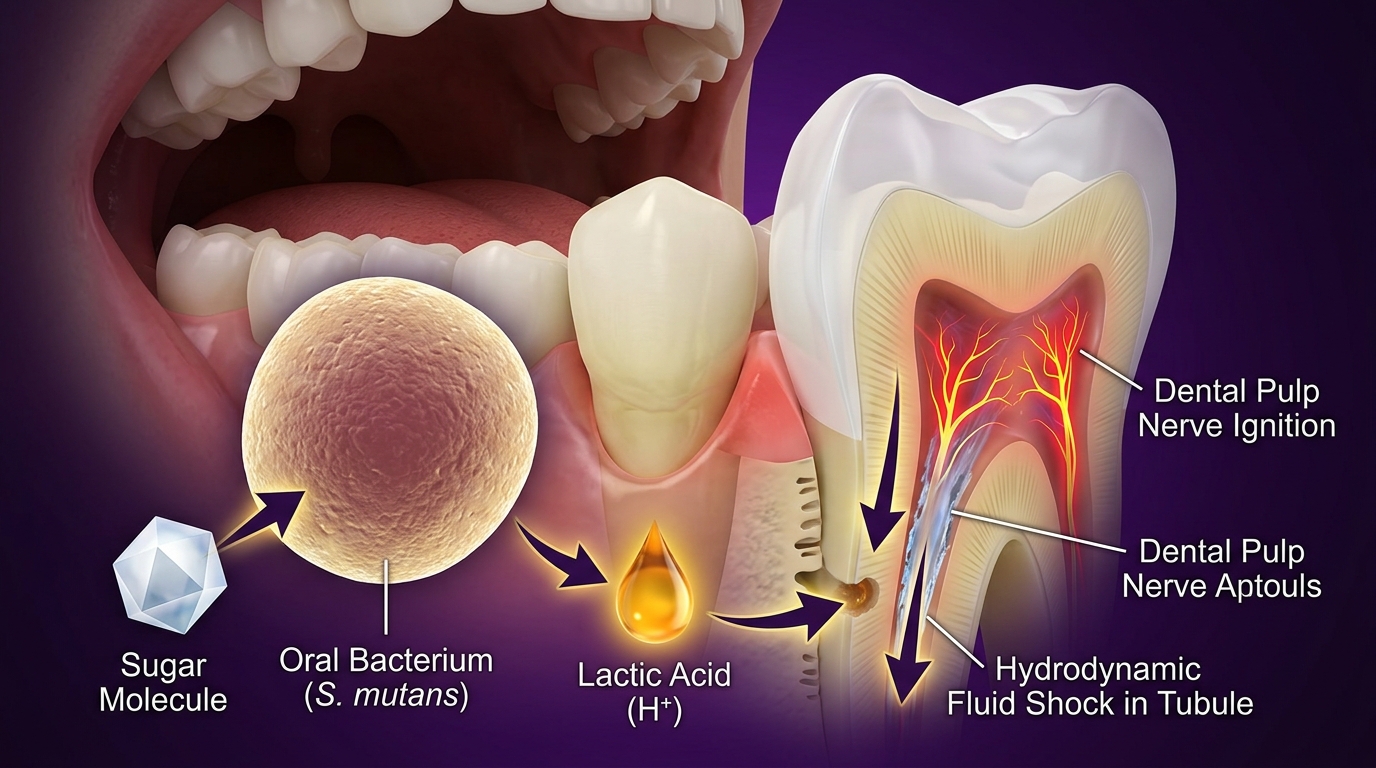
Carbohydrates and natural starches (from grains, vegetables, and snacks) enter the oral cavity and coat the teeth and gingival crevices.
Oral biofilm bacteria consume these sugar molecules as metabolic fuel, converting them directly into lactic acid (H⁺ ions).
The acidic drop (pH 4.5) dissolves the microscopic mineral plugs sealing exposed root tubules. This causes rapid, turbulent hydrodynamic fluid movement inside the open micro-tubule channels.
Rapid fluid shifts mechanically shear and excite nerve endings at the pulp border, firing continuous electrical burning signals down the Trigeminal Nerve (CN V).
Why a Zero-Carb Baseline Works: On a strict carnivore diet, there are zero fermentable sugars. With zero fuel, S. mutans cannot produce lactic acid. The oral pH stays alkaline (7.0 to 7.4), allowing tubule fluids to remain stable and calming peripheral nerve firing to 0/10.
How Acid Burns: Exposed Hardware & Dentinal Conduits
Healthy teeth are sealed by an enamel crown, but over decades of brushing, chewing forces, and periodontal shifts, gums recede. Once gum tissue recedes below the enamel margin, it leaves the porous root dentin exposed.
Mechanical Possible Root Causes
When gum tissue recedes, protective enamel ends, exposing the porous root surface (dentin). Over 30,000 microscopic fluid-filled tubules per square millimeter channel oral acids directly into the dental pulp and trigeminal nerve network.
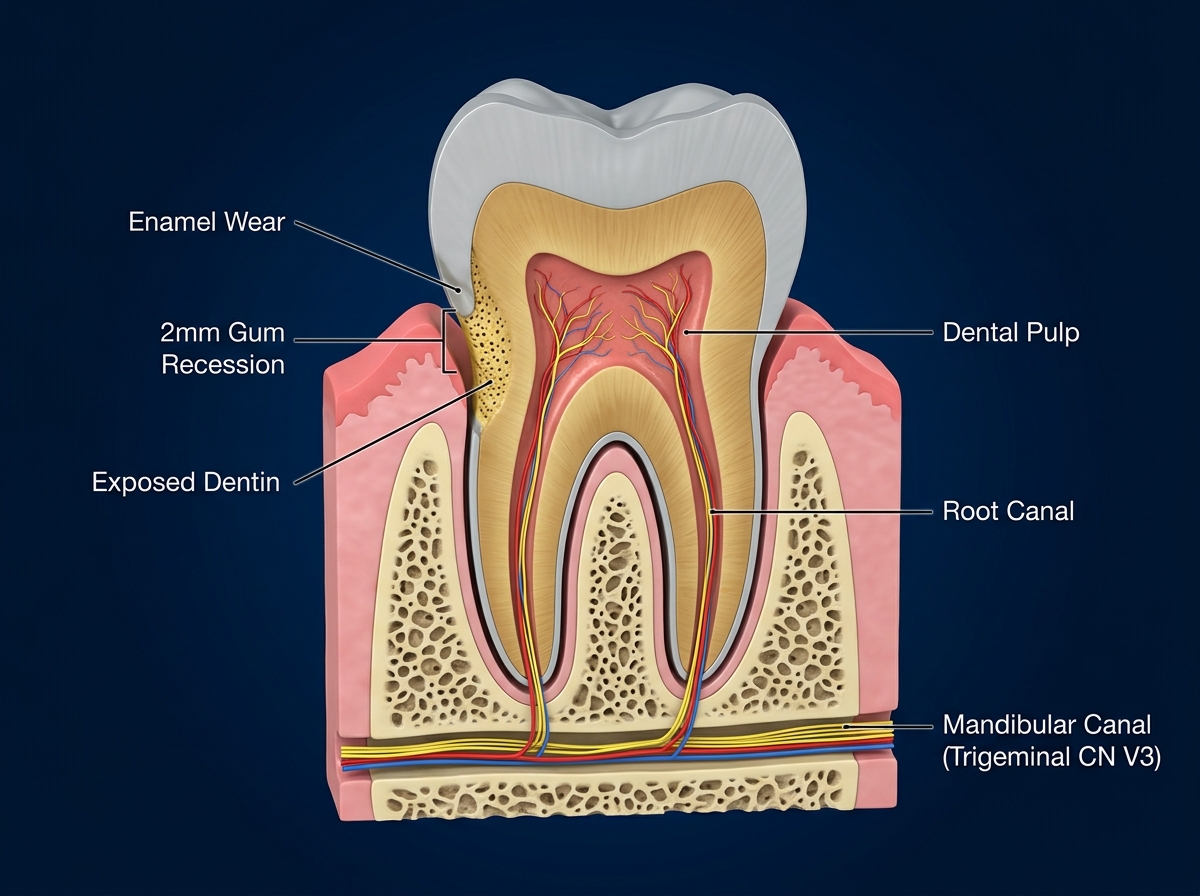
Direct Trigeminal Connection (CN V3): The tooth pulp nerves exit the root apex directly into the horizontal Mandibular Nerve Canal. When gum recession exposes porous root dentin, dietary acids bypass enamel and trigger immediate nerve excitation.
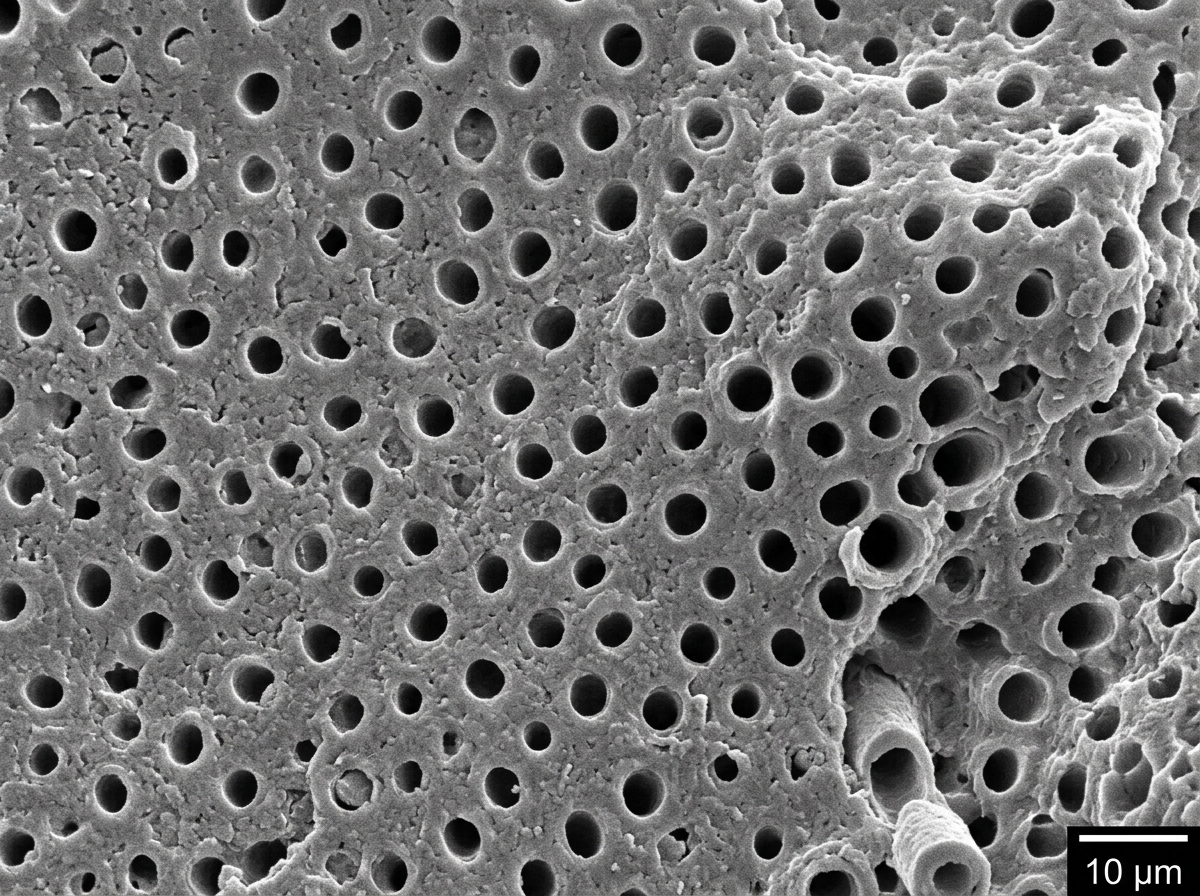
The Microscopic Scale: 20,000 to 45,000 Tubules Per Square Millimeter
Under electron microscopy, dentin is a dense matrix perforated with 20,000 to 45,000 open fluid tubules per mm². Even a minor 2 millimeter gum recession exposes 50,000 to 90,000 open micro-tubule channels directly to the oral environment.
The Acid Trigger Mechanism: Dietary and bacterial acids strip away the microscopic smear plugs that normally seal these pores. This causes rapid hydrodynamic fluid displacement and ionic acid penetration into the pulp, sending continuous pain signals through the apical foramen directly into the horizontal Mandibular Canal (Trigeminal CN V3).
The Trigeminal Connection: Acid-Sensing Ion Channels (ASICs)
Dentin is not a solid wall. It is honeycombed with 20,000 to 45,000 microscopic fluid-filled dentinal tubules per square millimeter. A single human tooth houses approximately 3 to 5 million tubules, adding up to over 100 million micro-channels across the entire mouth.
When gum recession exposes root surfaces or micro-margins develop around old dental work, oral acids wash over these open conduits.
Acids strip away the microscopic mineral smear plugs sealing the tubule apertures. This causes rapid hydrodynamic fluid shifts and acidic chemical diffusion straight into the dental pulp, where acid protons (H⁺) bind directly to Acid-Sensing Ion Channels (ASICs) on peripheral Trigeminal nerve endings.
Where ASICs Live: The Oral Acid Sensors
Human sensory nerve endings in the tongue, dental pulp, and palate are densely populated with Acid-Sensing Ion Channels (ASICs). The oral cavity possesses up to 10x higher nociceptor density than regular skin, making the mouth uniquely hyper-reactive to acidic chemical contact.
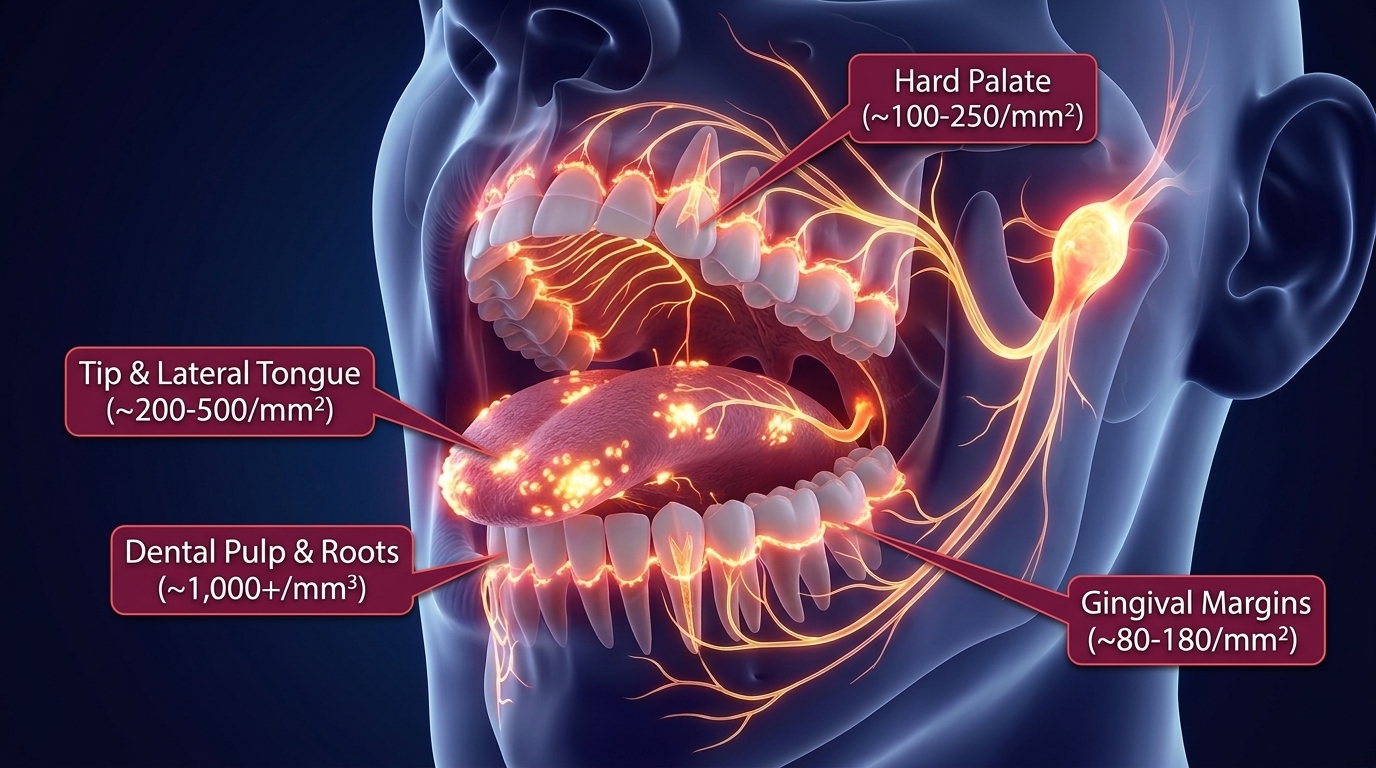
Anatomical Hotspots of Oral Acid Sensitivity
Innervated by the Lingual Nerve (CN V3). Houses the highest concentration of ASIC3 and ASIC1 channels in the human oral cavity.
Exposed tubules channel acids directly into intradental A-delta and C-fibers, which abundantly express proton-activated ASIC receptors.
Supplied by the Greater Palatine and Nasopalatine nerves (CN V2), creating the upper roof burning sensation during acid exposure.
Subgingival sulcular nerves detect localized pH drops caused by bacterial lactic acid fermentation along the gum line.
Radiating Pain & Central Convergence: Why the Entire Face Burns
At the peak of my burning episodes, the pain was not confined to a single tooth or the tip of my tongue. My entire mouth felt ablaze. The hard palate (roof of my mouth) felt scalded, my nasal passages burned with dry heat, my gums ached, and shooting pain radiated into my ear canals.
This occurs because all sensory fibers from the teeth, gums, tongue, palate, and nose converge onto the same second-order neurons in the brainstem (the Subnucleus Caudalis of the Trigeminal Spinal Nucleus).
When millions of pulpal and lingual ASIC3 channels fire non-stop from acid exposure, the central brainstem hub enters a state of central sensitization. The neural signals “spill over” and radiate along all three branches of Cranial Nerve V:
Trigeminal Radiating Pain
Where the nose, palate, and ear can burn
When exposed tooth roots or tongue nerves fire continuously from acid contact, neural signals overwhelm the brainstem hub and radiate across all three trigeminal branches through central convergence.
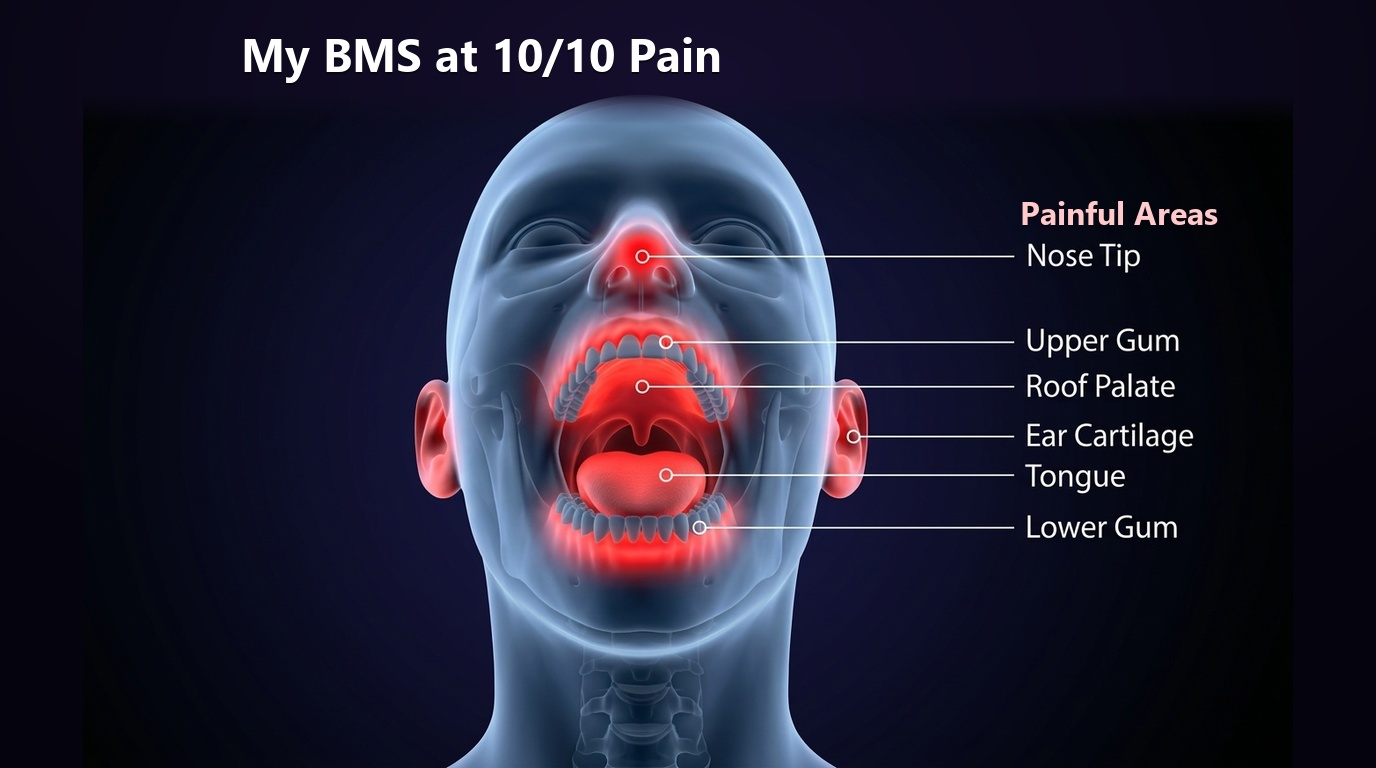
How Central Sensitization Creates "Ghost" Pain in Other Zones
Nasociliary and ethmoidal nerves receive spillover signals from the brainstem, creating a dry, burning sensation inside the nasal passages.
Nasopalatine and Greater Palatine nerves become hyper-sensitized, making the upper roof of the mouth feel scalded by hot liquid.
The Auriculotemporal nerve (branch of V3) wraps into the ear canal, causing ear fullness and radiating burning during intense oral flares.
Exposed dentinal tubules and lingual nerve endings provide the raw continuous acid current that fuels the entire neurological cascade.
Why Skin Pulp Ignores Acid, But Dental Pulp Screams:
If you squeeze lemon juice on the skin "pulp" of your fingertip, you feel zero pain because 20+ layers of dead, dry keratin (*Stratum Corneum*) block acid penetration. But inside the tooth, dental pulp has no keratin armor. It is pure living nerve tissue packed with the highest ASIC3 density in the human body. A microscopic acid leak causes an immediate 10/10 electrical emergency.
Peer-Reviewed Literature & Electrophysiology References
Key Finding: Proves human dental pulp neurons express heavy ASIC3 density and fire intense inward sodium currents under localized acidic shifts.
Key Finding: Demonstrates how chronic dental/lingual nociceptive firing induces central sensitization in the spinal trigeminal nucleus (Subnucleus Caudalis), causing radiating referred pain to the nose, palate, and ear.
Key Finding: Confirms pulpal and oral mucosal nerve terminals express 5x–10x higher acid-sensor density than somatic dorsal root ganglion (skin) neurons.
Key Finding: Details the Subodontoblastic Plexus of Raschkow, documenting 30,000 to 50,000 sensory terminals per tooth crown.
First Leak Found Under a Crown: A Non-Food Success Story
Before fixing my dental work, I thought the burning might be solely dietary. But six months ago, I discovered that I had a failing lower crown with three hidden cavities decaying underneath: one at the front margin, one at the back margin, and one along the bottom base where the crown met the tooth.
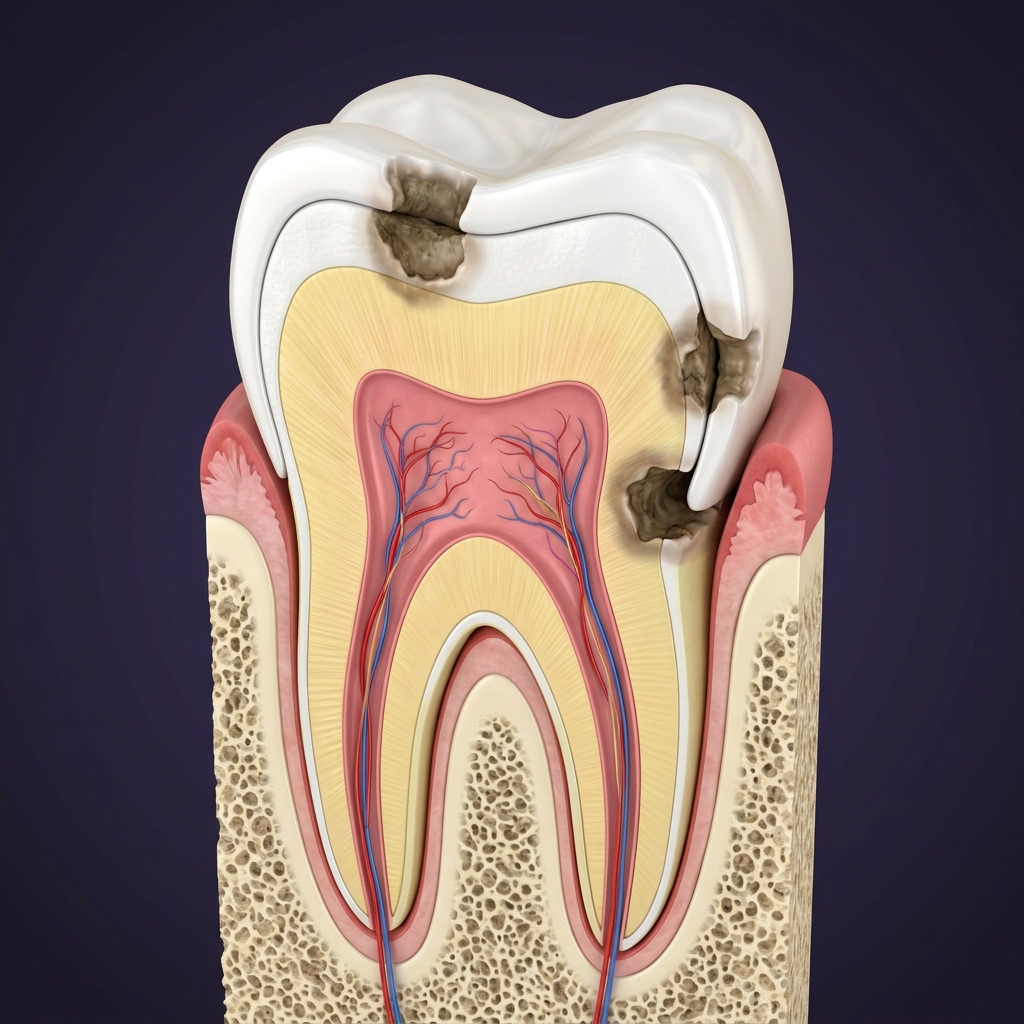
When my dentist removed the compromised crown, cleaned out all three decay pockets, and sealed the tooth with a fresh restoration, the chronic gnawing pain in my lower jaw vanished completely.
This was a massive personal breakthrough and a non-food recovery success story. It provided undeniable physical evidence that my burning pain was not an untreatable phantom mystery in my brain. It was a physical hardware defect communicating directly with localized chemical and bacterial irritants.
The Acidity of 30 Common Foods & Drinks
Strictly ranked by pH from the most aggressive acid triggers down to neutral zero-acid foods. If you are not ready for a strict carnivore baseline, start by eliminating the red and yellow items first to observe your pain levels.
AGGRESSIVE ACID: Direct Chemical Ignition
Extreme acidity (pH 2.2 to 3.7). Instantly dissolves tubule smear plugs and triggers acute peripheral trigeminal nerve pain.
Lemon & Lime Juice
High titratable organic acid that directly attacks exposed root cementum and dentin.
Sour Candies & Vitamin C Drops
Pure concentrated acid coatings dissolve enamel matrices and ignite direct trigeminal shock.
Soda & Energy Drinks
Extremely corrosive chemical wash that strips protective tubule smear plugs in seconds.
Apple Cider & White Vinegar
Highly volatile acetic acid penetrates open micro-tubules and causes intense nerve firing.
Kombucha & Fermented Teas
Fermentation produces strong organic acids that lower oral pH far below critical enamel safety.
Pickles & Pickled Brine
High sodium combined with low pH dissolves micro-resin bonding and exposes porous root surfaces.
Red & White Wine
Ethanol opens mucosal permeability while sharp plant acids irritate underlying nerve endings.
Grapefruit & Orange Juice
Sweetness masks aggressive organic acidity that bathes gingival margins in corrosive fluid.
Flavored Sparkling Waters
Carbonation creates carbonic acid that prolongs oral acidity between regular meals.
Hot Sauces & Acidic Salsas
Double-action trigger combining chemical acid erosion with TRPV1 pain receptor activation.
MODERATE & FERMENTABLE: The 72-Hour Latency
Moderate acid & starches (pH 4.0 to 5.8). Ferments into oral lactic acid, triggering delayed burning flares on Days 2 and 3.
Fresh Apples & Berry Smoothies
Fruit sugars stick to cervical tooth margins, providing continuous fuel for bacterial acid.
Beer & Hard Ciders
Moderate acidity paired with fast-fermenting maltose sugars feeds oral bacterial acid production.
Tomatoes & Tomato Pasta Sauces
Natural nightshade acids and high cooking concentration cause delayed 48-hour inflammatory flares.
Plain Greek Yogurt & Kefir
Healthy dairy cultures produce continuous lactic acid that can irritate unsealed tubules.
Sourdough & White Breads
Salivary amylase breaks starches into simple sugars that oral bacteria ferment into lactic acid.
Black Drip Coffee & Espresso
Moderate acidity combined with drying tannins reduces protective saliva output.
Green & Black Teas
Astringent polyphenols dry the oral mucosa and cause mild friction on sensitive tongue tissues.
Hard Cheeses (Cheddar / Gouda)
Safe in single meals, but multi-meal volume can build slight background sensitivity (0 to 1/10).
Potato Chips & Salted Crackers
Highly retentive starches lodge between teeth and degrade into localized acid pools.
Popcorn & Roasted Corn Snacks
Hulls trap in periodontal pockets while starches ferment over 72 hours into lactic acid.
General Vegetables & Green Salads
While raw vegetable tissue has a neutral or high baseline pH, oral bacteria ferment residual vegetable starches and natural sugars directly into corrosive lactic acid.
ZERO ACID & ZERO SUGAR: Complete Nerve Remission
Neutral physiological baseline (pH 6.8 to 7.4). Starves oral acid bacteria, leaving tubule seals intact and calming pain to 0/10.
Fresh Whole Mushrooms
Rich in beneficial beta-glucans with zero fermentable sugars to generate bacterial acid.
Herbal Teas (Chamomile, Peppermint)
Gentle plant botanicals with virtually zero tannins or organic acids, soothing sensitive oral mucous membranes.
Fresh Beef Steaks & Ribeye
Completely neutral pH with zero carbohydrates. Stimulates mineral-rich, alkaline saliva.
Ground Veal & Ground Beef
Zero bacterial fermentation in the mouth. Starves acid-producing biofilm completely.
Whole Roast Chicken & Thighs
Provides essential tissue building blocks without introducing any oral chemical irritation.
Pork Loins & Sugar-Free Bacon
High protein metabolism increases salivary urea, naturally raising oral pH to safe baseline.
Wild Shrimp & Fresh Oysters
Supplies essential zinc and trace minerals for mucosal repair without any acid triggers.
Wild Salmon & Red Fish
Anti-inflammatory marine fats soothe irritated mucosal linings with zero acid burden.
White Fish (Cod & Haddock)
Ultra-digestible protein that leaves zero fermentable sugar residues in the oral cavity.
Pasture-Raised Eggs (Omelets / Boiled)
Mildly alkaline whole-food matrix that coats and shields sensitive oral tissues.
Important: Test the Acidity of Your Drinking Water
Hydration CheckDrinking water is not universally neutral. Depending on your source (municipal tap, reverse osmosis filtration, or bottled spring water), water pH can range significantly from pH 5.0 (acidic) to pH 8.5 (alkaline).
Reverse osmosis or un-mineralized distilled water often absorbs ambient CO₂ to become mildly acidic (~pH 5.5–6.0). If you have exposed tooth tubules or raw oral mucosal tissue, repeatedly sipping acidic water throughout the day will prevent tubule remineralization and sustain low-grade nerve firing.
Stevia & Sugar Alternatives (pH ~6.8–7.0)
Tolerable BaselinePure stevia glycosides (Stevia rebaudiana) contain near-zero digestible carbohydrates. Unlike table sugar (sucrose), honey, or fruit sugars, stevia cannot be metabolized by *Streptococcus mutans* or oral lactobacilli into corrosive lactic acid.
Dry Spices & Seasonings (Salt, Pepper, Herbs)
Safe in ModerationPure sea salt, black pepper, garlic powder, onion powder, and dried culinary herbs contain minute, fractional carbohydrate quantities per serving. Because the absolute volume of fermentable starch left in the mouth is minuscule, it rarely generates enough localized lactic acid to breach tubule seals.
The 72-Hour Latency Trap & Amnesia
Once I reached a stable 2/10 on strict carnivore, human psychology worked against me.
When you are at a 10/10, you promise yourself you will eat plain ground beef and salt forever. But once you sit at a calm, pain-free baseline for a few weeks, your brain forgets how bad the fire was.
I would walk into the grocery store feeling fantastic. I would pass the snack aisles and start rationalizing:
“A bag of popcorn isn’t acidic. Popcorn is gentle, right? And what about some cooked vegetables? Vegetables are healthy. A little bit won’t hurt me.”
I bought them. I ate them. And every single time, I triggered the 72-hour latency trap.
If eating vegetables or popcorn caused immediate burning within five minutes, I would have stopped immediately. But BMS operates with a delayed biochemical latency:
- Day 1 (The Cheat): I ate the off-plan food. My mouth felt completely fine. I went to bed thinking I was permanently healed.
- Day 2 (The Smolder): A mild tingling returned to the tip of my tongue (3/10 pain).
- Day 3 (The Full Flare): The inflammatory cascade peaked. The burning surged back up to a 5/10.
- Days 4 to 6 (The Meat Reset): In panic and regret, I returned to strict meat, salt, and water. Within 72 hours, the inflammation calmed back down to 0/10 or 1/10.
As shown on the progression graph, I repeated this exact yo-yo cycle over one full year of testing and cheating before finally locking in six months of unbroken strict carnivore.
The Turning Point: Radical Acceptance
After a full year of riding this emotional and physical roller coaster, I had an honest conversation with myself.
The mental exhaustion of anticipating Day 3 flares was far worse than the discipline of sticking to plain meat. I had to practice radical acceptance: my oral tissues and sensitized nerve pathways simply do not tolerate plant acids, oxalates, or fermentable carbohydrates.
For the past six months, I locked in my strict zero-negotiation foundation:
- Core Nutrition: 100% strict ruminant meat (beef, lamb, pork, poultry, fish, eggs, mushrooms) and clean animal fats.
- Neutral Hydration: Pure water and mineral salt only.
- Zero Cheats: Six continuous months at a rock-solid 0/10 pain baseline.
The Cheese Nuance
Through careful post-baseline testing, I discovered one subtle exception: hard cheeses.
- 1 meal with cheese: Zero pain flare.
- 2 meals with cheese in one day: Causes a minor, temporary jump from 0/10 to 1/10.
Because a 1/10 is barely perceptible compared to the living hell of a 10/10, I occasionally accept that small trade-off knowingly. The difference today is conscious control instead of unpredictable misery.
Who I Learned the Carnivore Diet From
When I first considered eliminating all plant foods, I had the same doubts and questions anyone would: Is this safe long-term? Am I going to get scurvy? How do I actually start without crashing?
I spent hundreds of hours studying medical doctors, surgeons, and researchers who specialize in human evolutionary biology and zero-carbohydrate nutrition. Clinicians like Dr. Anthony Chaffee (neurosurgical resident and nutritional researcher) and Dr. Ken Berry (family physician and author) provided the clinical reassurance, physiological mechanics, and beginner roadmaps that gave me the confidence to conduct my own rigorous 18-month trial.
Here are essential guides, science breakdowns, and clinical discussions on inflammation to help you understand the fundamentals:
How I Learned About Carnivore: Top Doctors & Beginner Guides
When I first considered cutting out all plant foods, I was skeptical and concerned about safety. I spent hundreds of hours studying medical doctors and clinicians who specialize in nutritional science. Here are essential videos that helped me understand the biological mechanisms, answer fears like scurvy or deficiency, and start safely:
7 Things I Wish I Knew Before Starting the Carnivore Diet
Dr. Ken Berry shares the 7 crucial lessons and practical tips he wishes he knew when starting carnivore, covering fat adaptation, electrolytes, and avoiding common pitfalls.
Can The Carnivore Diet Eliminate Chronic Inflammation?
Neurosurgical doctor Anthony Chaffee explains how removing dietary defense chemicals and plant toxins calms systemic inflammation and allows the nervous system to heal.
The Ultimate Carnivore Beginner Guide & Daily Routine
Orthopedic surgeon and author of The Carnivore Diet reviews practical daily routines, dealing with social situations, and tracking inflammatory symptom resolution.
My Next Dentist Visits
Eliminating dietary acids extinguished the chemical fire, but the underlying hardware vulnerabilities still remain in my mouth.
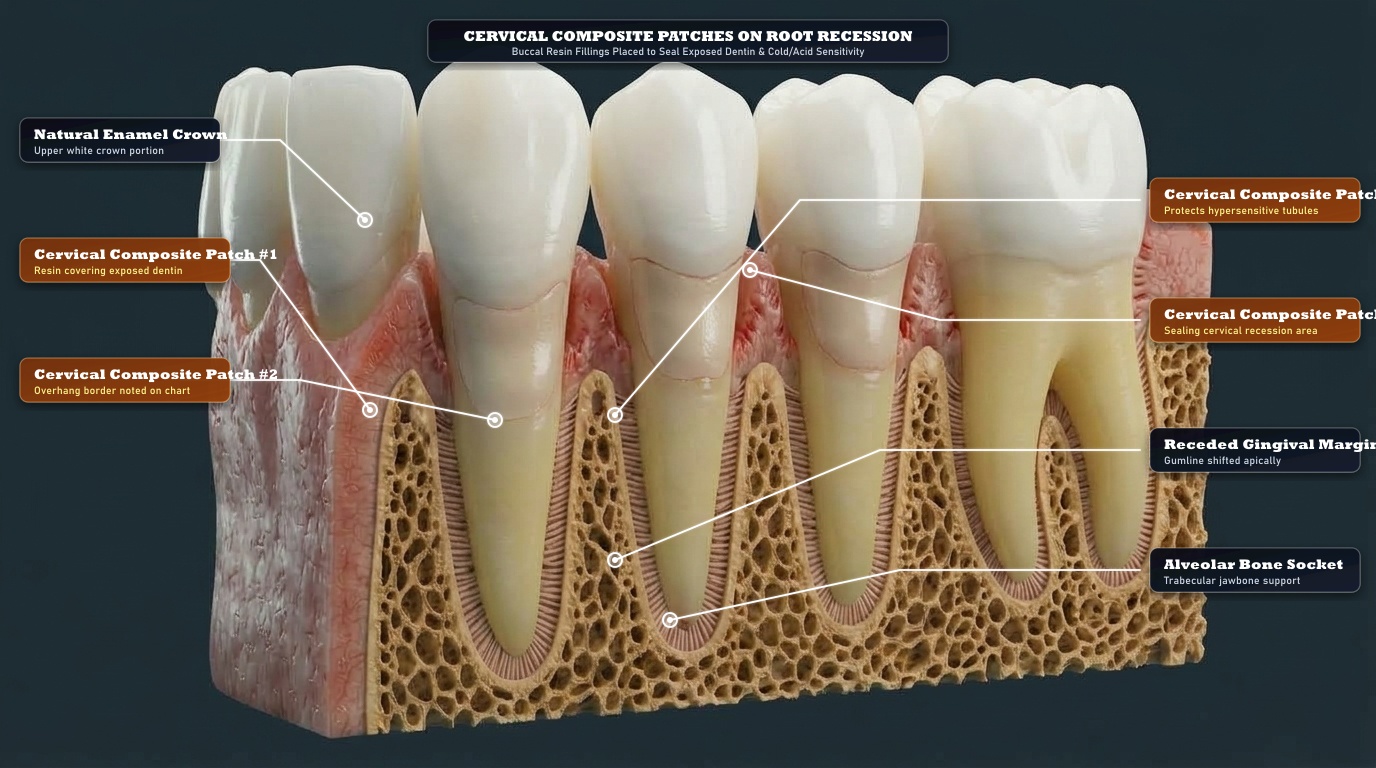
Over my next few appointments, I am focusing on three specific physical areas:
- Check the Recessions: Inspect the composite resin seals on my exposed root recessions to verify if microleakage or bonding degradation has occurred.
- Examine Micro-Infractions & Craze Lines: Check my molars for hairline micro-cracks where fluids can bypass the enamel.
- Assess Old Fillings: Evaluate the margins of my older amalgam and composite restorations for hidden gaps or secondary decay.
I will document every dental visit, measurement, and adjustment as I go.
Summary of What I’ve Done
Here is a summary of what I have documented and tested throughout this journey:
- Identified Specific Triggers: Tracked 6 escalating flare triggers over 48 months (alcohol, coffee, dental scaling, fruit acids, failing composite patches, and fermentable carbohydrates).
- Reset with Carnivore: Eliminated all sugars and plant acids using an all-meat and mushroom baseline, dropping acute 10/10 pain down to a stable 0/10.
- Tested 50+ Supplements: Systematically trialed over 50 vitamins, minerals, and water filtration setups, confirming that general supplements alone did not halt the burning.
- Uncovered the Acid & Hardware Link: Traced how oral bacteria convert sugars into lactic acid that washes over exposed root recessions, activating pulpal and lingual pain receptors.
- Resolved Localized Crown Leakage: Proved the hardware connection when replacing a failing lower crown with hidden decay completely eliminated chronic lower jaw pain.
- Maintained 6 Months at Zero Pain: Established strict dietary discipline while preparing for long-term dental hardware remediation.
Questions?
If you have questions about my 18-month carnivore experiment, what I eat now, dental hardware testing, or how to navigate your own oral burning symptoms, you do not have to figure this out alone.
Feel free to contact me directly, leave a comment under any of my YouTube videos, or ask questions inside our community Facebook group:
Contact Me Directly
Have a specific question about my diet, dental tests, or timeline? Send me a note directly through my contact form.
Comment on YouTube
Leave a comment under any video. I read every comment and answer common questions in upcoming video updates.
Join Facebook Group
Connect with fellow BMS patients, compare daily notes, and ask questions with the community in real time.
To receive my upcoming dental hardware logs, clinical breakdowns, and case studies as they are released, join my personal mailing list.
Let’s keep investigating, sharing our data openly, and decoding the burn together.